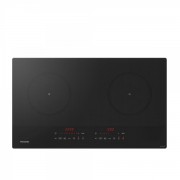
Built-in induction hobs are the top choice for many families during renovation or when replacing their cooktop. The BBE team will recommend and compare 8 popular models, while also sharing 5 essential tips for buying a built-in induction hob!
Built-in Induction Hob Recommendations
The BBE team has selected 8 built-in induction hobs, including products from GARWOODS, PANASONIC, RASONIC, WHIRLPOOL, BRANDT and Electrolux. Prices range from HK$2,988 to HK$6,295. The list below is arranged by price, from lowest to highest:
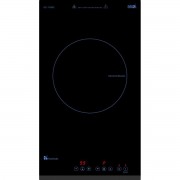
The GARWOODS EC-7130IC (Diamond Black Glass) is a 28.8cm built-in single induction hob, model EC-7130IC. It utilises advanced Half-Bridge Ultra Technology, providing powerful output up to 2800 watts. Its diamond black glass panel is made from high-quality EuroKera ceramic glass from France, combined with touch-sensitive controls, bringing an efficient, energy-saving and safe cooking experience to the modern kitchen. It can also be combined with all Series 7 Domino hobs.
The Panasonic KY-C223B 30cm 2800W built-in double induction hob offers a high total output of up to 2.8kW, with each cooking zone independently reaching up to 2.0kW, ensuring cooking efficiency and flexibility. It features a durable SCHOTT CERAN® glass panel that is easy to clean and stylish. The KY-C223B has a flexible design, supporting both built-in and countertop installation, integrating perfectly into modern kitchen spaces and providing you with a safe, convenient and efficient cooking experience.
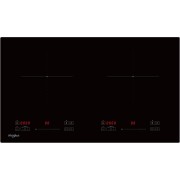
The PANASONIC KY-H1WZ70 73cm built-in/countertop IH induction hob features a 13A independent dual-zone design, with a maximum total output of 2.8kW, providing efficient and stable cooking performance. It has 9 power levels and 4 preset cooking modes to suit different culinary needs. The built-in timer can be set from 1 minute to 8 hours, complemented by a hot surface indicator and multiple safety protections, including overflow prevention, overheat protection and a child safety lock, enhancing user safety. Equipped with a non-slip ceramic glass surface, it is robust and easy to clean. It supports both built-in and countertop installation, flexibly adapting to various kitchen designs, and holds a Grade 3 energy efficiency label, making it energy-efficient and environmentally friendly.
The RASONIC RCI-S2028 2-in-1 double induction and ceramic hob has a total power of 2800W, combining the efficiency of an induction hob with the broad compatibility of a ceramic hob, providing a versatile cooking solution for modern kitchens. This hob uses robust German SCHOTT CERAN ceramic glass, ensuring high-temperature resistance and easy cleaning. It features 8 power levels, slide controls, and an extra-long 8-hour timer function. Whether for precise temperature control or long-duration simmering, it handles tasks with ease, offering a stable and reliable cooking experience. It can be installed built-in or countertop, offering flexible design.
The WHIRLPOOL IWHH7320SH is a 73cm built-in double induction hob, featuring a high-quality Schott Ceran® ceramic glass panel made in Germany, which is durable and easy to clean. With a total power of up to 4400W, it includes a Booster function and offers 12 power levels, allowing you to precisely control cooking temperatures for an efficient and energy-saving cooking experience.
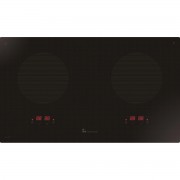
The Garwoods EC-2977 built-in double induction hob features a spacious 73cm cooking surface and a total power of up to 2800W, providing an efficient and energy-saving cooking experience. This induction hob uses advanced Half-Bridge Ultra Technology, is easy to operate, and has an exquisite design, making it an ideal choice for modern kitchens.
The BRANDT BPI272UBL is a 75cm built-in double induction hob, made in France with exceptional quality. With a total power of 3600W, it features a high-temperature resistant Kanger ceramic glass panel, providing an efficient and durable cooking experience. Its Ultraboost function instantly increases heating speed, combined with 9 power levels, allowing you to precisely control the cooking process and easily handle various cooking needs.
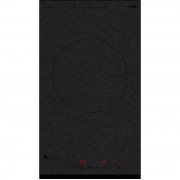
The Electrolux LIT30230C 30cm built-in induction hob is designed for modern kitchens. This double induction hob provides a total power of 3.4kW (requires 20A single-phase connection), featuring 9 power levels and a power boost function for rapid heating and efficient cooking. With its simple touch control panel, 1-99 minute timer, child safety lock, and other practical features, it brings convenience and safety to your home.
5 Tips for Buying a Built-in Induction Hob
Tip 1: Precisely Measure Dimensions and Reserve Space
Before choosing a built-in induction hob, the first step is not to look at brands, but to take a tape measure and measure your kitchen countertop and cabinet dimensions, including the countertop's length, width, thickness, and the depth and height of the cabinetry below. Built-in induction hobs on the market are usually specified by their cut-out dimensions, for example, common sizes like 290×520 mm. If the cut-out is too small, the hob won't fit; if too large, it can affect support and stability. So, before renovation or replacing your hob, confirm the cut-out dimensions for the model you plan to buy and communicate with your carpenter or kitchen fitter before making the cut, to avoid facing size incompatibility issues later if you want to change models later.
Additionally, built-in induction hobs need ventilation during operation. Sufficient space must be left in the cabinet below the countertop. It's generally recommended to leave at least a 5 cm gap around the unit, and the base cabinet should not be completely sealed. If necessary, add ventilation grilles or louvred doors to allow hot air to escape, preventing prolonged high temperatures from shortening component lifespan.
Regarding countertop material, consider its load-bearing capacity and heat resistance. Most brands recommend using stone or synthetic stone that resists heat well and does not easily deform. Avoid using thin wooden countertops to prevent deformation or cracks due to the unit's weight and long-term thermal expansion and contraction.
If you are switching from a gas hob to an induction hob, also check if the existing cut-out size and position are suitable. If needed, seek professional assistance to adjust or add a stainless steel frame to better fit the new hob to the countertop, ensuring both appearance and safety.
Tip 2: Choose the Number of Cooking Zones and Power Based on Cooking Habits
The size of a built-in induction hob is closely related to the number of cooking zones. Generally, options range from 30 cm single zone, double zone, up to 90 cm multi-zone, with 2 to 4 or more zones. Choose according to your household size and cooking habits, rather than simply pursuing as many zones as possible. If you are a 1-2 person household, mostly doing simple frying and boiling, and occasionally cooking two dishes at once, a 2-zone hob is sufficient and easier to arrange on the countertop. For 3-4 person families who often need to simultaneously boil soup, stir-fry, and pan-fry fish, choosing a model with 3 or more zones and a countertop width of about 60 cm or more will be more practical.
In terms of power, built-in induction hobs typically have a rated input power ranging from about 2,800W to 5,200W. Higher power means faster heating and stir-frying performance closer to open flame, but it also requires sufficient household circuit capacity. Most need a 20A or higher dedicated power socket. For average small families focusing on daily frying, boiling, and simmering, a single zone around 1,300W-1,600W is sufficient, with a total multi-zone power in the 3kW-4kW range being more balanced. If you prefer high-heat stir-frying or often cook large pot meals, you might consider higher wattage, but be sure to have an electrician confirm the distribution board capacity and power configuration to avoid frequent "tripped breakers" or overheating wires.
Also, check if it has a "Booster" mode, which is very useful when you need to quickly bring a large pot of water to a boil. However, when using it, be careful not to run other high-power appliances simultaneously to avoid overloading the circuit.
Tip 3: Pay Attention to Safety Features and Certifications
Induction hobs are promoted as flameless with lower surrounding temperatures, making them inherently safer than traditional open flames. However, when purchasing, you still need to pay attention to the built-in safety mechanisms and product certification marks, especially if there are elderly people, children, or pets at home; safety should be a top priority.
It is recommended to choose models equipped with features like a child safety lock (button lock), automatic shut-off when cookware is removed, spill detection, automatic shut-off, overheat protection, and overload protection. When the hob detects that cookware has been removed, abnormal pan bottom temperature, or a large amount of overflowing liquid on the panel, it will automatically stop heating or issue a warning, reducing the risk of accidents.
Furthermore, ensure the product meets safety standards, such as local or regional electrical safety marks, and confirm it is an officially imported model from an authorized agent to guarantee warranty and repair services. Avoid purchasing grey market (parallel import) or unbranded products with unclear origins and markings.
Regarding the panel material, most built-in induction hobs use heat-resistant glass or glass-ceramic panels. They should have impact and high-temperature resistance to withstand hot pots and daily bumps. When choosing, check if it indicates the use of well-known glass brands and the manual's restrictions on cookware weight and maximum base diameter.
For installation and use, follow the manual's requirements: have a qualified electrician install a dedicated power socket, do not change the plug or use extension cords yourself, and maintain ventilation under the hob. These seemingly tedious details are key to ensuring long-term safety and stable operation.
Tip 4: Don't Forget Cookware Compatibility and Power Adjustment
The heating principle of an induction hob uses electromagnetic induction to make the pot base itself heat up. Therefore, not all cookware can be used. If most of your cookware at home is glass, ceramic, or aluminium, you need to assess the cost of replacing cookware before switching to an induction hob, to avoid these additional expenses exceeding your budget later.
Generally, as long as the pot base is magnetic, it can be used, for example, stainless steel and cast iron. Most products or packaging will be marked with an "IH" or induction-compatible symbol. When buying new pots, you can test with a small magnet; if it sticks, it's usable; if not, it's not suitable. This is particularly important for families who like using various types of cookware.
Additionally, the size of the pot base affects the sensing effect. Most induction hobs have requirements for the minimum and maximum pot base diameter. If too small, it may not be detected and won't heat; if too large, heat distribution may be uneven. When buying, check the recommended cookware size range in the manual and compare it with your commonly used soup pots, woks, and frying pans.
Regarding power control, it is advisable to choose models with more levels and finer adjustment, such as those with 9-10 or even more power levels. This allows for low heat keeping warm and slow simmering without easily boiling over, while high heat stir-frying is more powerful. Combined with "timer function" and "keep warm mode", you can set the timer to automatically turn off when boiling soup or stewing, reducing the need to constantly watch the pot.
If you are used to judging doneness by the flame, you may need some time to adapt after switching to an induction hob. However, once you become familiar with the heating effects and times corresponding to each power level, you'll find the power stable and responsive, making it actually easier to ensure consistent cooking results.
Tip 5: Consider Aesthetics, Cleaning, and After-Sales Warranty
A built-in induction hob is not just a cooking tool but also part of your kitchen's appearance. Therefore, when choosing, you can also consider the design and ease of cleaning, such as whether the panel colour matches your countertop and cabinet style, whether the frame is a flush frameless design or has a metal bezel, and whether the touch interface layout is clear and user-friendly.
While a flush, edge-to-edge design looks cleaner visually and is less prone to trapping dirt, it requires higher precision in countertop installation. Traditional framed models are easier to install and can slightly cover the cut-out edges, offering more flexibility for existing kitchen retrofits. You can choose based on your renovation stage and budget.
For cleaning, most induction hobs use a seamless flat glass or ceramic panel, which is more convenient to clean compared to gas hobs with their pan supports and burner heads that need disassembly. Just wait for the panel to cool down after cooking, wipe with a slightly damp cloth and mild detergent. For sauce or sticky burnt marks, you can use a special scraper and glass cleaner. Remember not to use steel wool to avoid scratching the surface.
Brand and after-sales service are also important. It is recommended to choose a model from an officially authorised local agent, confirm the warranty period, whether extended warranties can be purchased, and the availability of spare parts for future repairs. Some appliance brands offer 1-3 years of additional warranty, providing more peace of mind for long-term use.
If you have budget considerations, you can refer to review reports from the Consumer Council or professional media to understand different brands' performance in safety, energy efficiency, noise, and durability. Then make a choice based on price, features, and design, so you can buy a built-in induction hob that truly suits your kitchen and is durable.
Consumer Council Guide Reference
The BBE team previously compiled the Hong Kong Consumer Council's test results for 13 built-in and countertop double-zone / full-surface induction hobs, focusing on comparing performance, energy efficiency, safety, and usability, and provided buying advice and recommendations for high-scoring models.
The Consumer Council tested samples with power ranging from about 2,800W to 5,200W and prices from approximately $3,980 to $21,300, covering 10 double-zone and 3 full-surface designs to suit different family needs.
The evaluation covered five main areas:
Performance: Boiling water and baking pancakes tested heating efficiency and heat distribution, showing overall efficiency of about 85% to 90%, but some models had uneven heat distribution.
Energy saving: Compared standby energy consumption and energy labels; some samples had lower actual efficiency than stated and higher standby power consumption.
Safety: All samples passed impact, insulation, and flame retardancy tests, but some models had incomplete labelling.
Low power control: Nearly 70% of samples did not meet international standards; only a few brands could stably maintain low temperatures. When using both zones simultaneously, some models had weaker power and significantly slower heating.
*Product prices are for reference only. Please refer to official channels for actual selling prices. When purchasing, pay attention to the latest Consumer Council reports and safety certifications.
BBE Appliance Professional Consultant has 30 years of home appliance retail and buying advisory experience, serving over 200,000 Hong Kong households with practical tips on cooker hoods, ovens, cooktops, and home appliance selection and maintenance.