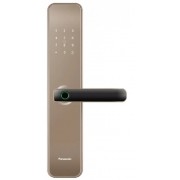
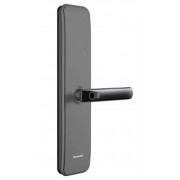
Introduction: When SONY 索尼 is mentioned, countless Hong Kong consumers immediately think of the outstanding imaging quality of its top-tier TVs, cameras, and game consoles. With its deep technological foundation and brand reputation, this electronics giant has long been a guarantee of quality. However, when this strength extends to a key part of the smart home—the electronic door lock sector—does SONY still perform flawlessly? The SONY Qrio Smart Lock series circulating in the market highlights Japanese manufacturing and damage-free installation. Is it truly a home security innovator worthy of its name, or merely a product riding on the halo of the brand? This article provides an in-depth analysis, consolidating opinions from major Hong Kong discussion forums, media reports, and even user feedback from Taiwan, Europe, and the United States, to reveal the real picture of SONY 索尼 electronic door locks.
Are SONY 索尼 Electronic Door Locks Good to Use? A Unique Market Position
Before exploring the pros and cons in depth, we must first understand the market positioning of SONY’s core electronic door lock product—the Qrio Smart Lock. Unlike common electronic door locks on the market that require drilling and replacing the entire lock cylinder, such as mainstream models from Philips, Samsung, or Panasonic, the design concept of the SONY Qrio Lock is an “add-on” smart device. It is not intended to replace your existing door lock, but is installed on the thumbturn of the indoor door lock and uses a built-in motor to turn the original lock cylinder. This design directly determines its main advantages and fatal shortcomings. Simply put, it aims to “add” smart functions to an existing door lock, rather than provide a brand-new, integrated security solution.
Advantages
Based on reviews from different regions, the advantages of the SONY Qrio Lock mainly focus on convenience and brand effect:
Truly damage-free installation: This is the biggest selling point of the Qrio Lock. Since it is only attached to the inside of the door, with no need to drill holes or make modifications to the door, it is highly attractive to tenants and users who do not want to damage the appearance or structure of their front door. A user on Hong Kong’s “LIHKG” discussion forum said that the entire installation process took less than ten minutes: simply peel off the double-sided tape and stick it on, making it extremely convenient.
Keeps the original key: Since the lock cylinder is not replaced, the original physical key can still be used as usual. For households with elderly family members or domestic helpers who are not used to electronic products, this is an important transitional solution that offers dual assurance.
-
Control via smartphone and smartwatch: Through the dedicated app, users can easily lock and unlock the door. In particular, it supports Apple Watch, allowing users to open the door with a simple tap on the watch, delivering a high level of convenience. This has received considerable praise among younger users who enjoy a tech-forward experience.
Automatic locking and unlocking functions: Qrio Lock can detect the Bluetooth signal from the user’s phone, automatically unlocking when you approach the door and automatically locking some time after you leave. An unboxing post on Taiwan’s Mobile01 forum introduced in detail the convenience of this “hands-free” function, especially when carrying heavy items, as there is no need to struggle to find your keys.
Share electronic keys: Users can send time-limited electronic keys to family members, friends, or part-time cleaners through the app, and can revoke access at any time, making visitor access management more flexible and secure.
SONY brand halo: It is undeniable that the name “SONY” itself carries a strong brand effect. Many consumers have higher expectations for its smart door lock based on their trust in SONY in other electronic product categories.
Disadvantages
However, the “add-on” design of the Qrio Lock also brings many obvious and widely criticised shortcomings. These issues are especially magnified in the Hong Kong market, where practicality and security are highly valued:
Questionable security: This is the most central point of controversy. The Qrio Lock itself provides no physical protection; it is merely a machine that “turns the key for you.” The actual security level of the door lock depends entirely on your existing old lock. If your old lock has a low security rating and is easy to pry open, adding a Qrio Lock will not help. In Hong Kong home security discussions, this design is generally viewed as treating the symptoms rather than the root cause, and is far less reassuring than replacing the entire lock cylinder with a high-security electronic lock.
Stability and connection issues: Many users from Hong Kong, Taiwan, and even US Reddit forums have reported that the Qrio Lock’s Bluetooth connection can occasionally be unstable. Sometimes it takes several seconds or even longer to connect and unlock successfully, losing the speed that a smart door lock should provide. Some users have also reported app crashes or situations where the app fails to recognise the door lock, forcing them to take out their physical key to open the door and significantly weakening the overall experience.
Power consumption issues: The official claim is that battery life is considerable, but real-world usage varies from person to person. Some mother users on Hong Kong’s “Baby Kingdom” forum reported that due to Hong Kong’s humid weather, or because household members enter and leave frequently, the batteries drain much faster than expected and need replacing in around six months, increasing maintenance costs and the potential risk of being locked out.
Plastic material feel: Compared with the zinc alloy or metal housings commonly used by other brands of electronic door locks, the body of the Qrio Lock is made of plastic. Although this is intended to reduce weight and make adhesive installation easier, many users who value product texture see it as relatively cheap-looking, and have concerns about its durability.
Compatibility limitations: Although the Qrio Lock is designed with multiple accessories to fit door lock thumbturns of different shapes, not all older door locks in Hong Kong homes are perfectly compatible. Before purchase, you must carefully check the type of door lock in your home, otherwise it may not be installable.
Expensive price: As a relatively single-function “add-on” device, the Qrio Lock is not cheap. At a similar price point, the market already offers some full-featured integrated electronic door locks with fingerprint recognition and password functions, making its value for money comparatively low.
Selected Real Reviews from Hong Kong and Overseas Users
Hong Kong Discussion Forums (LIHKG, Discuss.com.hk)
Hong Kong users’ discussions are generally very practical, focusing on the two major questions of “is it safe?” and “is it stable?” A LIHKG netizen stated bluntly: “This is only a toy that helps you turn the key. Its anti-theft capability is zero; you would be better off changing to a good lock cylinder.” Another Discuss.com.hk user shared: “At first I thought it was very convenient and I didn’t need to carry keys. But after several times waiting at the door for it to connect to Bluetooth for a full minute, and on rainy days too, it really made me annoyed. In the end I changed to an integrated lock with fingerprint access.” Overall, the Hong Kong market has low acceptance of this non-integrated design, considering it more of a novelty tech gadget than a reliable home security device.
Taiwan Reviews (PTT, Mobile01)
The Taiwan market has relatively high acceptance of Japanese brands. In the early stages, there were quite a few unboxing posts and positive discussions praising its design concept and installation convenience. A PTT netizen said: “For tenants, it is a godsend. You don’t have to worry about being scolded by the landlord for drilling holes.” However, as usage time increased, negative feedback about connection delays, app errors, and battery life gradually grew, and reviews became increasingly polarised.
Reviews from Europe and the United States (Reddit, Amazon)
In European and US markets, similar add-on smart door locks, such as August Smart Lock, have existed for some time, so consumers are not unfamiliar with the Qrio Lock concept. Discussions on US Reddit compare it with August, generally concluding that SONY’s design is simpler and cleaner, but that its app functions and ecosystem integration, such as integration with Google Assistant or Amazon Alexa, are less mature than its competitors. Reviews from European technology websites also point out that the basic version, which relies entirely on Bluetooth, lacks remote control capability and requires an additional Qrio Hub to achieve it, increasing the overall cost.
Recommended Model: SONY Qrio Smart Lock
Based on the above analysis, if you still believe the “damage-free installation” feature of the SONY Qrio Lock fully meets your specific needs, for example if you are a tenant or your home’s door lock does not allow any modifications, the following is a specification summary of its main model. Please note that, as required, only one main model is listed here.
Item
SONY Qrio Smart Lock (Q-SL2)
Product Type
Add-on smart door lock (non-replacement type)
Installation Method
No drilling required; uses high-strength double-sided tape to attach to the inside of the door
Unlocking Methods
Smartphone app (Bluetooth), Apple Watch, dedicated remote control (sold separately)
Main Functions
Automatic locking/unlocking, electronic key sharing, access record tracking
Power Supply
CR123A lithium battery x 2
Remote Control
Requires Qrio Hub (sold separately) for remote operation via the internet
Suitable Users
Tenants, users who do not want to modify the door lock structure, and tech enthusiasts with a strong pursuit of ultimate convenience
The SONY 索尼 electronic door lock is a product with “prominent strengths and equally distinct weaknesses.” However, after an in-depth analysis of its negative reviews, our recommendation is more cautious.
Its biggest selling point, “damage-free installation,” is also its biggest security weakness. For Hong Kong households that regard home security as their top priority, a smart device that cannot improve the physical protection level of the door lock itself has quite limited value. Frequent complaints about connection stability and battery consumption also seriously affect the reliability and convenience expected of a smart product. Considering its considerable price, there are more trustworthy options on the market.
A Safer and More Reliable Alternative Recommendation: PHILIPS and PANASONIC
PHILIPS 飛利浦 Electronic Door Locks
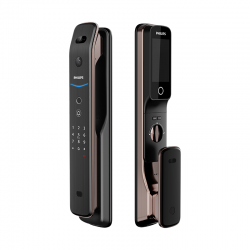
As a well-known European electronics brand, PHILIPS has also invested deeply in the electronic door lock sector and its research and development. Completely different from SONY’s “add-on” concept, PHILIPS provides a complete integrated electronic door lock solution that directly replaces your original mechanical lock. Its reliability is reflected in the following points:
Solid physical protection: PHILIPS electronic door locks usually adopt a high-strength zinc alloy one-piece body and are equipped with a C-grade security lock cylinder. Whether in terms of anti-prying, impact resistance, or anti-drilling protection, they provide physical security far beyond the SONY Qrio Lock.
Mature multi-mode unlocking technology: In addition to basic app control, PHILIPS door locks commonly integrate multiple unlocking methods such as Swedish FPC semiconductor fingerprint sensors, passwords, and key cards. These technologies have been proven in the market over many years, offering high stability and fast response, and avoiding the delays or failures that may occur when relying solely on Bluetooth.
Comprehensive security functions: Features such as fake PIN code protection, dual verification, anti-peephole unlocking, and low-battery reminders are all included, building a more comprehensive security line from software to hardware.
As another Japanese brand deeply familiar to the public, PANASONIC’s product philosophy is closer to the “durability” and “peace of mind” required for everyday household use. PANASONIC electronic door locks inherit the brand’s fine tradition in the home appliance sector, and their reliability is widely praised:
Rigorous craftsmanship of a Japanese brand: PANASONIC electronic door locks uphold the rigorous attitude of a Japanese brand in design and manufacturing. From the layout of internal electronic components to the durability of the external mechanical structure, everything undergoes strict testing, resulting in a relatively low failure rate.
User-friendly and stable design: PANASONIC product designs usually do not pursue the most cutting-edge functions, but instead refine existing technologies to their most stable and user-friendly state. The operating interface is clear and intuitive, making it especially suitable for households with elderly family members and children, ensuring every member can use it easily.
Comprehensive after-sales service: In the Hong Kong market, PANASONIC has a well-established agency and after-sales service network. Whether for installation or subsequent repair and maintenance, it can provide more timely and professional support, which is crucial for a key product such as a door lock that affects daily life.
If your primary considerations are long-term stability, durability, and the assurance of brand reputation, PANASONIC is undoubtedly a steadier and more practical choice than the SONY Qrio Lock. For details, please visit: https://hkele.com.hk/Door-Lock-Safe-Box/PANASONIC-%E6%A8%82%E8%81%B2
About Us
BBE Appliance Professional Consultant
BBE Appliance Professional Consultant has 30 years of home appliance retail and buying advisory experience, serving over 200,000 Hong Kong households with practical tips on cooker hoods, ovens, cooktops, and home appliance selection and maintenance.