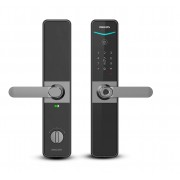
BOSCH, a century-old brand from Germany, is renowned in the fields of home appliances and industrial tools, and its “German engineering” label is deeply rooted in consumers’ minds. In recent years, BOSCH has entered the smart home market with its strong brand halo, and its electronic door lock series has attracted considerable attention. However, is this home appliance giant’s electronic door lock range equally trustworthy? This article focuses on the Hong Kong market, combining discussions from major local forums such as LIHKG and Hong Kong Discuss, media reports, and user reviews from Taiwan, Europe and the United States, to provide you with a comprehensive and in-depth analysis.
Are BOSCH electronic door locks good to use? Market overview and real user feedback
In Hong Kong, the electronic door lock market is highly competitive, with brands such as SAMSUNG, PHILIPS and YALE already occupying important positions. As a later entrant, BOSCH quickly attracted a group of quality-focused consumers thanks to its brand recognition. However, when we look deeper into online communities, we find that user reviews of BOSCH electronic door locks are polarised. Some users praise their minimalist design and solid build quality; others question their software stability, after-sales service and durability. Below, we objectively summarise opinions from different sides to help you understand their real-world performance more clearly.
Combined Hong Kong and overseas user reviews: advantages of BOSCH electronic door locks
From positive reviews across different channels, we can summarise several core strengths of BOSCH electronic door locks:
Brand image and German-style design aesthetics:
This is BOSCH’s most obvious advantage. Many users choose BOSCH primarily because they trust its “German brand” image. Its product designs generally follow a German-style minimalist and practical approach, with smooth lines and a premium appearance that can easily blend into modern home interiors. Whether it is the hidden fingerprint design of the ID60 or the slim body of the EL600 series, their aesthetics have indeed received many positive comments.
Solid hardware materials and build quality:
Drawing on its experience in tool manufacturing, BOSCH electronic door locks mostly use high-strength zinc alloy or aluminium alloy materials for the lock body and panels. The overall structure feels sturdy, giving a sense of solidity and security. Some Hong Kong users have shared that when touching the actual product, they can feel its weight and metallic texture, which contrasts with some brands that feel more plastic-heavy.
Diverse unlocking methods:
BOSCH’s electronic door lock product line covers the mainstream unlocking methods on the market, including fingerprint, password, access card, key, and Bluetooth or app unlocking on selected models, meeting the usage habits of different family members. Its fake PIN code function (entering random numbers before and after the correct password to prevent peeping) is also standard, enhancing security.
Selected models are equipped with distinctive security technologies:
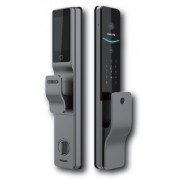
For example, the “finger vein recognition” technology used in the higher-end EL600VF is claimed to be harder to replicate and more secure than traditional fingerprint recognition. Although actual experience varies from person to person, this technology has indeed become a major selling point of the product.
In-depth analysis: disadvantages of BOSCH electronic door locks
Despite the advantages above, negative reviews of BOSCH electronic door locks on major Hong Kong forums and technology forums such as Taiwan’s Mobile01 should not be ignored. These issues are often key factors affecting long-term user experience:
Poor software stability and app experience:
This is the point most commonly criticised by users. Many Hong Kong and Taiwan users report that BOSCH’s dedicated mobile app has basic functions, an outdated interface design, and frequent problems such as unstable connections, delays, or failed push notifications. For a product marketed as “smart”, the lacklustre software experience seriously affects its value. One LIHKG netizen put it bluntly: “I bought it for the brand name, but the app is so useless I don’t even want to open it.”
Inconsistent after-sales service and installation quality:
In Hong Kong, the installation and after-sales support of electronic door locks depend heavily on the professionalism of agents and installers. Some reviews point out that certain BOSCH installation services are not directly managed by the original manufacturer, resulting in installers being insufficiently familiar with the products, rushed installations, or even damage to the door. When product problems arise, difficulty making repair appointments and slow responses have also become major areas of consumer complaint.
Concerns over durability of core components and power consumption:
Although the outer casing uses solid materials, the durability of internal core components has been questioned by some users. Users from the United States have reported on forums that their BOSCH smart locks developed motor faults or a significant drop in fingerprint module recognition rate after about a year. In addition, batteries draining too quickly is also a common issue. Some users say they need to replace the batteries every few months, which differs noticeably from the battery life officially claimed.
Relatively low value for money:
BOSCH electronic door locks are generally priced at a mid-to-high level, but the core functions and stability they provide may not be better than other mature brands at the same price point or even lower. A large part of what consumers pay is for the “brand premium” rather than the product quality itself. After comparison, some savvy consumers believe that the same budget can buy PHILIPS or PANASONIC models with more complete functions and a more stable reputation.
Key model analysis: EL600VF, EL600F, ID60
To give you a more concrete understanding, we provide a simple analysis of three BOSCH models that have attracted more attention in the Hong Kong market:
Some users report that the finger vein recognition success rate drops when fingers are dry or too cold, and the price is high.
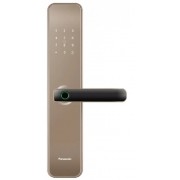
BOSCH EL600F
Semiconductor fingerprint recognition, push-pull design, similar appearance to the EL600VF, and a relatively economical option.
Inherits the software instability and power consumption issues commonly seen in the EL series.
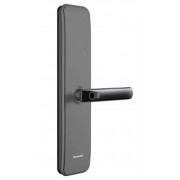
BOSCH ID60
Hidden fingerprint design, extremely minimalist appearance, handle-style opening, with a strong sense of design.
The fingerprint module is hidden behind the handle, which some users find not intuitive enough; requires high installation precision.
Overall, these three models each have their own design merits, but in terms of core stability and smart experience, they all face, to varying degrees, the common issues mentioned above.
BOSCH electronic door locks are products with “clear strengths and equally obvious weaknesses”. However, after analysing their negative reviews in depth, our recommendation is more cautious.
Why are PHILIPS and PANASONIC more reliable choices?
For consumers who see security, stability and convenience as their top priorities, we more strongly recommend brands that have long been established in the electronic door lock sector and have a more solid market reputation, such as PHILIPS and PANASONIC.
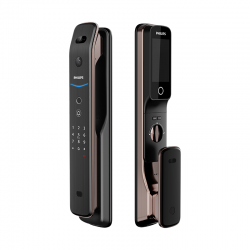
PHILIPS has a very high market share and a good reputation in Hong Kong’s electronic door lock market. Its success is no accident:
Mature and stable system: PHILIPS electronic door locks have been validated by the market for many years. The stability, smoothness and functional completeness of their operating system and mobile app are far ahead of BOSCH. Whether it is remote authorisation, entry and exit record checking, or various smart scenario integrations, the experience is more reliable.
Comprehensive sales and service network: In Hong Kong, PHILIPS has a large and professional authorised installation and after-sales team. From purchase consultation and on-site installation to subsequent repair and maintenance, the process is standardised and the service quality is assured, effectively addressing the installation and after-sales issues consumers worry about most.
Design tailored to the local market: PHILIPS product designs fully consider the needs of Hong Kong households. For example, its signature push-pull design is intuitive and effortless to operate, making it very suitable for elderly people and children.
PANASONIC, as a representative of Japanese manufacturing, has electronic door lock products that perfectly reflect the brand’s persistent pursuit of quality and durability:
Excellent quality control and durability: Japanese brands have always been known for rigorous quality control. PANASONIC electronic door locks are highly meticulous in the material selection and manufacturing of core components such as motors and circuit boards, with an extremely low failure rate and durability that is well regarded in the industry. For a security product used frequently every day, this level of reliability is crucial.
User-friendly detailed design: PANASONIC products are full of the human-centred care associated with Japanese brands. For example, its silent mode, accuracy of low-battery reminders, and user-friendly fingerprint recognition angle all improve the daily user experience in subtle ways.
Focused on the core, with stable performance: Compared with BOSCH’s immaturity in smart functions, PANASONIC focuses more on perfecting the most fundamental aspects of an electronic door lock: “security” and “stability”. It may not have the flashiest features, but every recognition and every opening and closing action is accurate and reliable, which is exactly the foundation of a door lock product.
In summary, although BOSCH’s brand halo is very attractive, in the specialised field of electronic door locks, the maturity, stability and service system of its products still require long-term market testing. By contrast, PHILIPS wins with its market maturity and comprehensive service, while PANASONIC stands out for its unmatched reliability and durability. Both are choices more worthy of Hong Kong consumers’ trust in 2025.
About Us
BBE Appliance Professional Consultant
BBE Appliance Professional Consultant has 30 years of home appliance retail and buying advisory experience, serving over 200,000 Hong Kong households with practical tips on cooker hoods, ovens, cooktops, and home appliance selection and maintenance.